
Panel Chairs
Form meets Function
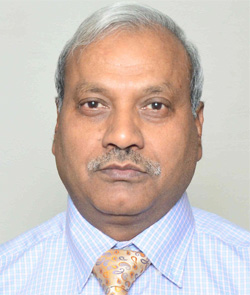
Prof. Mannar R. Maurya,
Indian Institute of Technology Roorkee, India
Prof. Mannar Ram Maurya is currently with the Department of Chemistry as a Professor of Inorganic Chemistry of Highest Academic grade. He has served as Chair of Department of Chemistry and Dean of Faculty Affairs of Indian Institute of Technology Roorkee, India. He received his Ph.D. from Kurukshetra University (NIT, Kurukshetra), Kurukshetra, 1987, M.Sc. from Bundelkhand University, Jhansi, 1981 and B.Sc. from Gorakhpur University, 1979. His current research interests are: structural and functional models of vanadium haloperoxidases, immobilization of molybdenum and vanadium complexes on inorganic/ organic polymers and their uses as recyclable and sustainable systems for catalytic oxidation of organic substrates and single pot multi component reactions. His group also try to identify the intermediate(s) to understand the mechanism involved in catalytic reactions. He has published more than 190 research articles and 10 review articles (citations >7,000, h index = 50).
Modarator - Plenary and Keynote
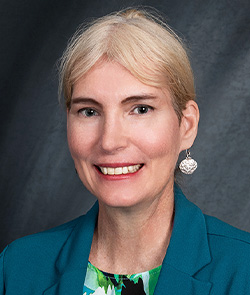
Prof. Astrid M. Müller,
University of Rochester, Rochester, NY
Astrid M. Müller is an Assistant Professor of Chemical Engineering at the University of Rochester since 2018. Prof. Müller obtained her PhD in Physical Chemistry for work on ultrafast reaction dynamics at the Max Planck Institute of Quantum Optics in Germany. Her postdoctoral research at UC Berkeley and UC Riverside involved developing a fundamental understanding of laser–matter interactions. As a staff scientist at Caltech, she pioneered the pulsed laser synthesis of earth-abundant water-splitting materials to enable decarbonization technologies. Her independent research centers on gaining a quantitative understanding of electrocatalytic processes and reactive species from water, utilizing pulsed laser techniques to create nanomaterials with controlled surface properties. This work uniquely positions Prof. Müller’s group to understand how nanocatalysts and electrocatalytic mechanisms impact the performance of nanomaterials in sustainable energy, green chemistry, and aqueous PFAS destruction applications.
Session Chair

Dr. Stewart P. Lewis,
Pyramid Polymers LLC, Zanesville, OH
Dr. Stewart P. Lewis is a world leading expert in the area of sustainable cationic polymerization. He is the only person to invent multiple methods to effect such reactions under aqueous conditions. Lewis’ innovations include heterogeneous initiator systems and those that operate in a truly catalytic manner which have no counterpart to date. His chemistries offer significant benefits from both cost and environmental standpoints. He also has expertise in the synthesis of novel acids useful for engendering such transformations. Some of these researches have been featured prominently in journals such as Journal of Polymer Science. Dr. Lewis, devised and patented methods on the preparation of perfluoroarylated Lewis acids, and successfully implemented their use in cationic polymerizations. His expertise encompasses anionic, cationic ring-opening, and condensation polymerizations.
Session Chair
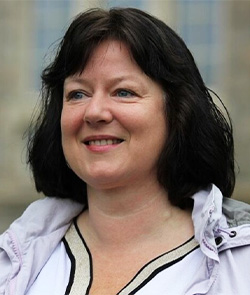
Prof. Elisabeth E. Jacobsen,
Norwegian University of Science and Technology, Norway
Elisabeth Egholm Jacobsen completed her MSc degree in Organic chemistry and Biotechnology at the Norwegian University of Science and Technology (NTNU), Department of Chemistry in 1999 after employment as an analytical chemist in the cosmetic industry for 11 years. She earned her PhD in Organic Chemistry in 2004. Since 2005 she helds an associate professor position at the same department. Her research focusses on synthesis of enantiopure biologically active compounds, f. inst. enantiopure drugs, by use of enzymes as chiral catalysts. Her teaching has been focusing on green chemistry, biocatalysis, general and organic chemistry, natural product chemistry, spectroscopic methods and chromatography. She has extensive international collaboration, both in Europe and Asia. She is a Treasurer of the Board of European Society of Applied Biocatalysis (ESAB).
Session Chair
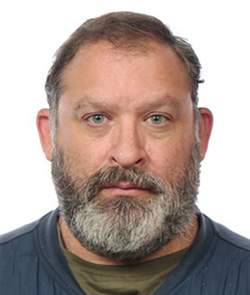
Prof. Ricardo Jose Chimentao,
Universidad de Concepcion, Chile
Ricardo Jose Chimentão graduated in Chemical Engineering at the State University of Campinas (Unicamp, Brazil) in 1999. At Unicamp, He received his Master´s degree in 2002. In 2007, He received his Ph.D. degree from the Universitat Rovira i Virgili (Spain). Between 2007 to 2016 He was a postdoctoral fellow in different research centers: CNRS (France), Purdue University (USA), LNLS (Brazil), and at the Laboratory for Chemical Technology at the Ghent University (Belgium). He was an Assistant Professor at the Faculty of Chemical Sciences of Universidad de Concepcion (Chile) from 2016 to 2022 and at present he has become an Associate professor.
Session Chair
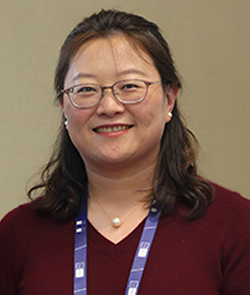
Prof. Hui Yan ,
University of Louisiana at Lafayette, Lafayette, LA
Dr. Hui Yan is an Associate Professor of Chemistry at the University of Louisiana at Lafayette whose research applies advanced synchrotron surface analysis to study fundamental interactions in heterogeneous catalysis and environmental chemistry. She earned her Ph.D. in Environmental Chemistry from the University at Albany, SUNY, following M.S. and B.S. degrees from Yangzhou University in China.
Session Chair
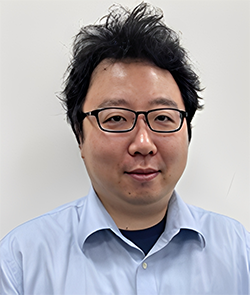
Kyojiro Morikawa ,
National Tsing Hua University, Taiwan
Kyojiro Morikawa received his Ph.D. degree from the University of Tokyo in 2013. He worked in the University of Tokyo from 2013 to 2014. From 2014–2016, he worked at Tokyo Institute of Technology. Since 2016, he has been working at the University of Tokyo. Since 2021, he has been appointed at National Tsing Hua University (Taiwan). His research interests cover microfluidics and nanofluidics, especially for glass nanochannel fabrication, nanoscale liquid chemistry, nanofluidic devices such as nanofluidic reactor, separation device, and so on.